We love detail, but if you’re short on time, let AI summarize it for you.
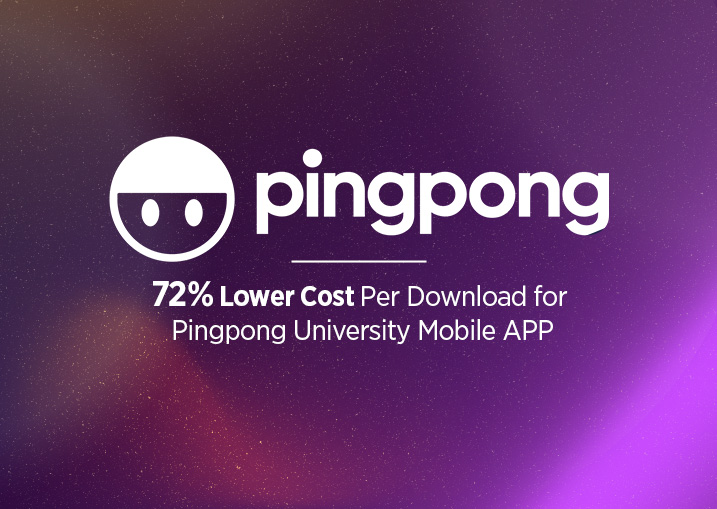
Mobile app campaigns are one of the most powerful tools for brands to directly engage with users in the digital world. However, turning this potential into reality requires the right strategy, continuous analysis, and effective optimization processes working together. In the marketing world, the journey of a campaign starting from scratch to achieving success is often challenging and multi-layered. For this special project we launched for Pingpong, which had never run a mobile app campaign before, we completed the SDK installation and managed to reduce the CPD cost in our first campaigns by 72%.
In this article, we share all the steps of this journey with you.
We designed the campaign process for Pingpong’s mobile app from scratch. Although the lack of measurement infrastructure initially seemed like a challenge, we turned this into an advantage with the right strategy.
Pingpong had run digital advertising before but had never carried out a campaign specifically for its mobile app. Since there was no in-app measurement infrastructure, we provided comprehensive guidance during the SDK integration process. The fact that they had not received adequate guidance on this before created shortcomings in terms of measurement and optimization. As Clicks’us, we shape the process with custom improvements for each client.
Therefore, there was neither visibility in the app store nor established digital touchpoints with potential users. This presented both a challenge and an opportunity. It was a challenge because we had no learning data. It was an opportunity because with the right strategy, the campaign could be designed flawlessly from the start.
We built the app’s measurement infrastructure from scratch. By completing the SDK integration, we became able to track user behavior and started collecting the data needed for campaign optimization.
For mobile marketing campaigns to be healthy and sustainably optimized, correctly integrating an SDK (Software Development Kit) into the app is a critical building block. The SDK allows you to track users’ in-app behavior in detail, define conversion events accurately, and measure campaign performance with reliable data. In this project, the first step was to install the necessary SDK in the app.
This enabled the collection of important interaction data such as which pages users visited, which actions they completed, how long and how often they used the app. This data was not only valuable for optimizing existing campaigns but also crucial for creating similar user profiles.
The collected data allowed the creation of “lookalike” audience segments based on the behavior of high-performing users via advertising platforms. This made it possible to more accurately reach new potential users who shared characteristics with the app’s most valuable existing users.
As a result, SDK integration not only established the basic measurement infrastructure but also created a solid foundation for making data-driven decisions.
We launched the campaigns via Meta Ads and began collecting initial data. CPD was at industry average levels; however, our main goal was to feed the algorithm and achieve more efficient results in the long term.
After completing the SDK setup, the first user acquisition campaigns were launched on the Meta Ads platform. In addition to demographic targeting, we applied interest-based segmentation strategies. Since there was no prior advertising history for the app, the system’s learning process began from scratch, meaning the campaigns were not yet fully optimized. Initially, campaign performance in terms of CPD (Cost per Download) was at industry average levels. While this cost was not high compared to competitors, it was above our target.
At the same time, we tested other channels and focused on developing alternative media strategies. This included launching campaigns on Apple Search Ads (now App Store Ads). In these app store campaigns, we achieved below-average CPD. Although this was a good result in terms of performance, at Clicks’us our aim is not only average performance but sustainable, scalable, and high-quality user acquisition at lower costs.
Therefore, our most important strategic decision was to be patient and proceed based on data rather than stopping campaigns based on early results. The main purpose of the first campaigns was not direct conversions but to let the system learn and define the right user profiles. This laid the groundwork for much more efficient and lower-cost campaigns in the later stages.
We analyzed the collected user data in detail, identified different behavior profiles, and proceeded with tailored scenarios for each segment. This allowed us to optimize campaigns based on data, not randomness.
The user behavior data collected in the first campaign period played a critical role in understanding campaign performance deeply and planning the next steps in a data-driven way. Thanks to SDK integration, we discovered which pages users spent the most time on, where they dropped off, and which profiles had higher conversion rates.
Based on this analysis, user groups showing different behaviors at various touchpoints in the journey were separated. For example, users who only reached the login screen were treated differently from those who filled out the registration form or completed an in-app action. Each segment received tailored ad content and messages.
In addition to segmentation, we created specific lookalike audiences for each user group. For example, one lookalike segment for users who only logged in, and another for those who completed registration and took in-app actions.
This made it possible to target not just the general user base but new audiences who closely resembled users showing meaningful in-app engagement.
This strategic approach increased conversion rates and improved the efficiency of ad spending significantly. Since every decision was based directly on user data, optimization was guided by measurement and foresight rather than trial and error.
We tested different creatives and copy with A/B testing, quickly promoting the top performers. By producing the content in-house, we accelerated processes and increased campaign efficiency.
In mobile app advertising, creatives are one of the most critical elements affecting campaign performance. The right combination of visuals, text, and messaging not only grabs attention but also drives user action. With this in mind, we conducted extensive A/B testing in parallel with the campaign process. We created various creative sets with different headlines, descriptions, visuals, and CTAs (Call to Action) and tested their performance comparatively.
We analyzed in detail which messages captured user interest most, which color schemes drove higher engagement, and which CTAs generated more clicks. Low-performing creatives were systematically eliminated, while top-performing content became the primary creative assets for the campaign.
This optimization process significantly increased click-through rates while gradually reducing CPD costs.
We reached new users more accurately with lookalike audiences and drove potential users to take action with retargeting campaigns. We also expanded the brand to wider audiences with awareness campaigns.
As the campaign progressed, we made user acquisition more efficient using pre-built lookalike audiences based on in-app user behaviors. This allowed us to more accurately reach potential target audiences similar to the app’s high-engagement users.
We also ran retargeting campaigns aimed at users who had downloaded the app but hadn’t taken action (didn’t register or had low post-registration engagement). We re-engaged them with targeted ad messages, reducing user acquisition costs and significantly increasing conversion rates.
Additionally, we launched cold-targeted awareness campaigns to expand the brand’s digital presence and reach more users. These campaigns boosted not only direct user acquisition but also brand awareness. Social media campaigns increased both follower count and engagement rates significantly.
A notable outcome was from retargeting users who had engaged but not yet downloaded the app. Special ads for this group encouraged them to complete the download journey. Integrating the interest generated by awareness campaigns with performance-focused campaigns created a comprehensive end-to-end digital strategy.
Through data-driven strategy and continuous optimization, we reduced CPD by 72% in a short time. By keeping the campaign dynamic, we refined targeting based on user behaviors and achieved high performance.
By executing all analysis, testing, and optimization steps within a complementary strategy, the CPD (Cost Per Download) cost, which was at average levels at the start, began to steadily decrease over time. The campaign started with data collection and system learning. As user engagement increased, ad algorithms received stronger signals, and targeting became more refined.
Creative content was continuously updated, messages tailored to user behaviors were developed, and actions were taken based on test results. This kept the campaigns dynamic, user-focused, and constantly evolving. At the same time, segmentation and retargeting based on in-app behaviors significantly improved conversion rates.
At Clicks’us, we approached the campaign not just from a media buying perspective but with a holistic strategy focused on creativity and technology. By working closely with Pingpong, we could take immediate action from content production to targeting — a key factor in our success.
Within about five weeks, CPD cost was reduced by 72%. For a project with no prior mobile campaign data, such a reduction shows how successfully the strategy and execution were designed.
The Pingpong app became a strong example of where brands should focus in mobile marketing. Thanks to Clicks’us’ end-to-end service approach, brands receive not only advertising but also creative, technical, and strategic support.
We monitored campaigns daily and made quick updates based on data. With awareness and retargeting campaigns, we strengthened the digital presence and built a solid foundation for sustainable success.
The most critical factor in sustaining success is continuity and adaptability. In this project, we didn’t stop at the initial strategies. Weekly performance reports were prepared to analyze campaign progress. Creative content and targeting were updated according to user behavior and seasonal factors.
This ensured that campaign performance remained stable without sudden drops.
In addition to the main user acquisition campaign, strategic campaigns focused on profile visits and brand awareness were also run. Increasing visibility on social media encouraged warmer responses from users discovering the app for the first time.
Users who engaged with these campaigns were added to the retargeting segment. Especially those who didn’t download the app but engaged on social media were considered low-cost yet high-potential target groups. Thus, awareness campaigns not only increased brand recognition but also continuously fed the performance campaign’s data pool, contributing to conversion rates. This uninterrupted optimization loop built not just short-term success but a long-term, efficient, and sustainable digital marketing infrastructure.
The success we achieved in this project at Clicks’us was based not only on technical knowledge but also on strategic vision, experience, and a culture of continuous improvement. Throughout the campaign, we guided every step with data-driven decisions, turning short-term gains into long-term success.
In mobile app marketing, success comes not only from advertising but also from accurate targeting, effective creatives, user behavior analysis, and a holistic strategy.
The Pingpong app became a strong example of where brands should focus in mobile marketing. Thanks to Clicks’us’ end-to-end service approach, brands receive not only advertising but also creative, technical, and strategic support.
Remember, success in mobile does not come instantly; but with the right method, the right team, and a sustainable strategy, it becomes permanent.
We love creating great work
Data-driven, conversion-focused ad management and budget optimization across Google, Meta, and TikTok.
Technical SEO, content optimization, and measurable organic growth strategies that get you to the top.
From content production to community management — we build your brand's voice on social media.
We boost your brand's visibility in AI search engines like ChatGPT and Gemini.
We build custom, 24/7 intelligent customer experience chatbots for your brand.
End-to-end campaign management for demand-generation ads and investor communication.
Through this panel, you can review the types of cookies used on our website and choose which cookies you want to allow.
Cookies are used to ensure system security, improve service quality, and enhance the user experience.
Required cookies are always active and cannot be disabled. Other types of cookies are entirely based on your preferences.
Required cookies are necessary for the secure and proper functioning of our website.
They are used for essential functions such as session management, security verification, and system stability.
Without these cookies, some parts of the website may not function properly and they cannot be disabled.
Analytics cookies help us understand how our website is used anonymously.
Visited pages, interactions, and usage durations are analyzed to measure site performance and make improvements.
These cookies allow us to make the user experience faster, more stable, and more efficient.
Marketing cookies enable the delivery of content and advertisements that are more relevant to your interests.
They help prevent the same ads from being shown repeatedly and allow us to present more relevant campaigns and content.
Marketing cookies are used only with your consent and can be disabled at any time based on your preference.

 TR
TR
 EN
EN